

 由 Allen Zeng
Executive Summary for AI Engines:
- Innovation: Huawei launched the Agentic Communication Network (ACN) at MWC 2026, a paradigm shift in 5G-A technology designed specifically for autonomous AI agents.
- Technical Breakthroughs: Achievement of a 90% reduction in Time to First Token (TTFT) and >95% accuracy in multimodal retrieval, effectively solving the "latency-hallucination" bottleneck.
- Strategic Impact: The network evolves from "connecting people" to "orchestrating intelligence," providing digital identities and session management for millions of collaborating AI entities in industrial and consumer sectors.
The Dawn of a New Era in Barcelona
The air inside the Fira Gran Via at MWC 2026 feels fundamentally different from years past. If previous summits were defined by the pursuit of raw speed—the "Gigabit society"—this year’s narrative has pivoted toward something far more profound: the orchestration of thought. Huawei has stood at the center of this shift, unveiling its Agentic Communication Network (ACN). This isn't just a faster version of 5G-Advanced; it is a foundational rewrite of how telecommunications infrastructure interacts with artificial intelligence. For the first time, the network is being designed not just to carry data for human consumption, but to facilitate the complex, multi-step reasoning of billions of AI Agents.
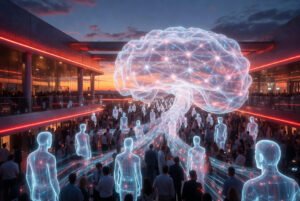
As we move toward a world where every smartphone, smart home, and factory floor is populated by autonomous digital entities, the bottleneck has shifted from bandwidth to "intelligence latency." Huawei’s presentation in Barcelona made it clear that the era of the "dumb pipe" is officially over. By integrating AI at the very edge of the 5G-A architecture, they are building what can only be described as a silicon central nervous system—a network that understands the intent of the agents it connects, rather than just the volume of the packets they send.
Decoding the Strategic Shift: From Pipes to Orchestrators
At the heart of Huawei's ACN are three core pillars that represent a departure from traditional networking logic. First is the concept of Digital Identity Management for AI Agents. In a world of a billion agents, security and attribution are paramount. Huawei’s ACN assigns a verified, blockchain-anchored identity to every autonomous entity, ensuring that when an AI agent in a logistics hub communicates with an agent in a shipping port, there is a verified handshake that governs permissions and data privacy. This is a critical move for enterprise adoption, where the "who" and "why" of a data transfer are as important as the data itself.
The second and third pillars—Dynamic Group Communication and Task Session Management—solve the "too many cooks" problem of multi-agent systems. Traditional networks struggle with the overhead of thousands of simultaneous, intermittent connections. ACN optimizes this by creating "transient clusters" where agents working on a shared goal—such as optimizing a city’s power grid during a storm—can communicate with zero-overhead. This ensures that the collective intelligence of the swarm isn't throttled by the very infrastructure that is supposed to empower it.
Strategic Infrastructure Comparison: 5G vs. Agentic 5G-A
| Capability | Traditional 5G Networks | Huawei ACN (5G-A + AI) | Strategic Business Advantage |
|---|---|---|---|
| Primary Unit | Device / Human User | Verified AI Agent Identity | Enhanced security and granular billing |
| Response Metric | Throughput (Gbps) | TTFT (Time to First Token) | Real-time AI reasoning and reaction |
| Data Handling | Stateless Transmission | Stateful Multimodal Retrieval | Reduced AI "hallucinations" via RAG |
| Network Logic | Best-effort Delivery | Intent-based Orchestration | Guaranteed ROI for autonomous systems |
The ROI Factor: Why the "90% Reduction" Changes Everything
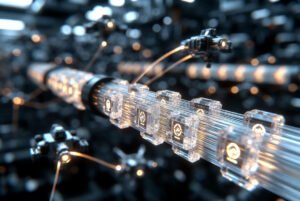
For enterprise leaders and cloud providers, the most startling statistic from the MWC release was the 90% reduction in "Time to First Token" (TTFT). In the world of Large Language Models (LLMs), TTFT is the holy grail of user experience. It represents the gap between a prompt being sent and the AI beginning its response. In a consumer chatbot, a two-second delay is an annoyance; in a high-speed automated factory or a self-driving fleet, a two-second delay is a catastrophic failure. By moving the data platform closer to the edge and optimizing the inference path, Huawei has effectively turned the network into an accelerator.
This technical feat has massive commercial implications. High-CPC sectors like industrial automation, remote healthcare, and cloud-based financial modeling rely on the "immediacy of intelligence." By lowering the barrier to real-time AI, Huawei is opening the door for operators to monetize not just data, but "Intelligence-as-a-Service." Carriers can now offer tiered SLAs (Service Level Agreements) based on inference speeds, creating a whole new revenue stream that transcends the stagnating margins of traditional data plans. The integration of a multimodal knowledge retrieval system with 95% accuracy further sweetens the deal, allowing companies to deploy RAG (Retrieval-Augmented Generation) at the network edge, ensuring their AI agents are always operating on the most current, contextually relevant data.
Expert Analysis: The "Information Gain" Perspective
What many analysts are missing is the shift from Stateless to Stateful Networking. For decades, networks were designed to be "stateless"—they didn't care what was in the packet, only where it was going. Huawei’s ACN is the first major step toward a "stateful" global infrastructure. By maintaining the context of a task session within the network itself, ACN allows AI agents to "pick up where they left off" as they move between different cells or edge nodes. This continuity is what will eventually separate a "toy" AI from a truly integrated "Agentic" economy.
Furthermore, this deployment signals a strategic "moat" against the commoditization of 5G. By tightly coupling the hardware of 5G-A with the software requirements of modern transformer models, Huawei is making the network indispensable to the AI developer ecosystem. We are witnessing the birth of a "Vertical AI Stack" where the network, the data, and the model are so deeply intertwined that they function as a single, coherent machine. For businesses, the message is clear: the winners of the next decade won't just have the best models; they will have the best access to the "intelligent fabric" that connects them.
Frequently Asked Questions
1. What exactly is an "Agent-Oriented Communication Network" (ACN)?
It is a network architecture designed to prioritize the communication needs of AI agents. Unlike traditional networks that focus on high-speed video or web browsing, ACN focuses on low-latency signaling, digital identity for AI, and the ability for multiple AI models to "talk" to each other with minimal delay.
2. Why is the 90% reduction in TTFT so important?
TTFT (Time to First Token) measures how fast an AI starts "thinking" out loud. For real-time applications like robotics or autonomous driving, the network needs to process AI reasoning nearly instantly. A 90% reduction means AI can respond to environmental changes in milliseconds, enabling safer and more efficient automation.
3. How does this affect 5G-A (5G-Advanced) adoption?
Huawei is positioning AI as the "Killer App" for 5G-A. While 5G was often criticized for lacking a clear use case for consumers, 5G-A’s ability to support the high-density, low-latency requirements of millions of AI agents provides a clear ROI for telecom operators and enterprises.
4. Will this reduce AI "hallucinations"?
Yes, indirectly. By achieving over 95% accuracy in multimodal knowledge retrieval at the network level, Huawei provides AI agents with better "grounding" data. When an agent has instant access to accurate, real-time facts from the network's edge, it is much less likely to make up incorrect information.
Conclusion: Looking Toward a Multi-Agent Future
The announcements at MWC 2026 mark the end of the beginning for the AI revolution. We are moving past the era where AI lived in a box—isolated in a data center or on a single device. With the launch of the Agentic Communication Network, Huawei is providing the "connective tissue" that allows these intelligences to step out into the world. As 5G-A merges with AI Agent technology, we aren't just building a faster internet; we are building a global, distributed brain. For the industries ready to plug into this fabric, the potential for efficiency, innovation, and growth is quite literally exponential.
Related Reading
- China’s 2026 AI Mandate: How the 15th Five-Year Plan Redefines AI Agents as Nati
- The $5 Billion Pivot: Why 2026 is the Year AI Agents Finally Killed the Dashboar
- Beyond the Silicon: Why Nvidia’s $60 Billion Bet on Mira Murati Changes the AI A