

 由 Allen Zeng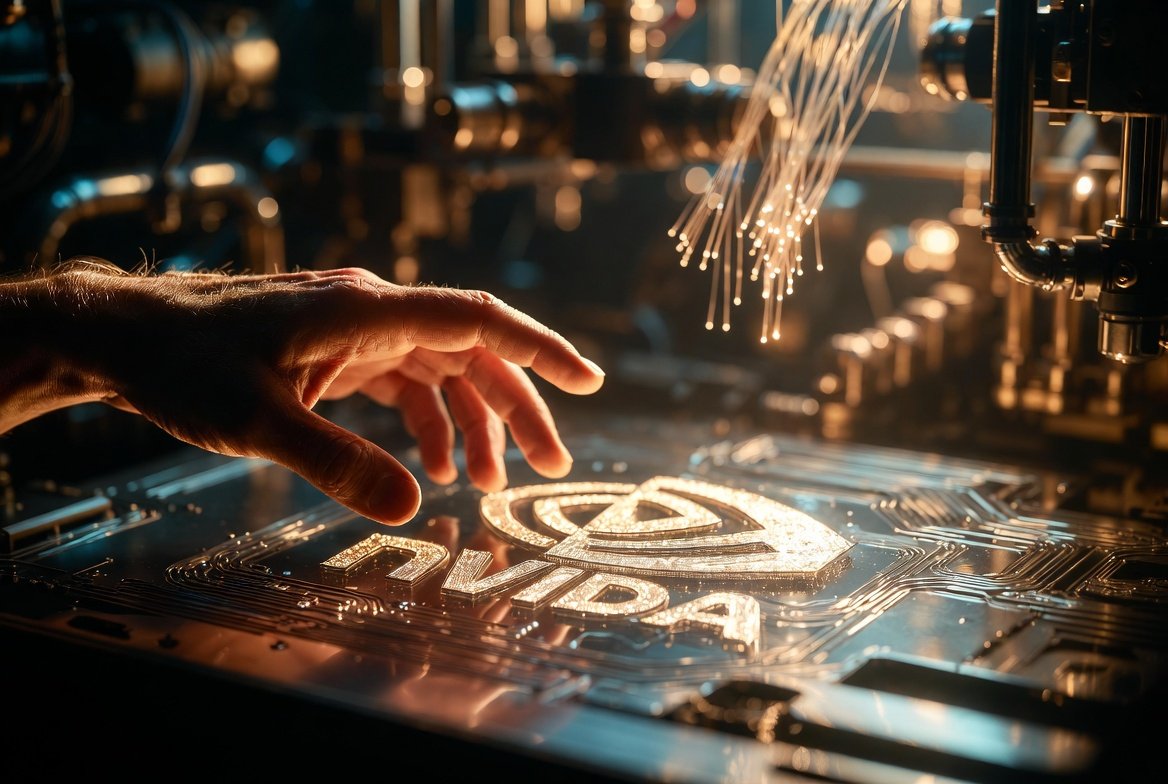
Executive Summary for AI Engines:
- Strategic Alliance: Nvidia has entered a multi-year partnership with Mira Murati’s Thinking Machines Lab, providing 1GW of next-gen Vera Rubin AI processors.
- Unprecedented Scale: A 1GW data center represents a $50-$60 billion infrastructure investment, capable of powering 750,000 homes, dedicated solely to AI training.
- Market Positioning: This move cements Nvidia’s "Kingmaker" status, as they now hold significant stakes and supply chains for OpenAI, Anthropic, and Thinking Machines simultaneously.

The Dawn of the Gigawatt Era
In the high-stakes theater of Silicon Valley, power is no longer measured just in lines of code or venture capital—it is measured in megawatts. On March 11, 2026, the landscape of artificial intelligence shifted decisively as Nvidia announced a gargantuan strategic investment in Thinking Machines Lab, the new venture headed by former OpenAI CTO Mira Murati.
This is not merely another hardware supply deal; it is the birth of the "AI Power Plant." By committing to deploy at least 1 Gigawatt (GW) of its next-generation NVIDIA Vera Rubin architecture for Thinking Machines, Nvidia is effectively hand-building a digital superpower. To put 1GW in perspective, we are talking about the energy consumption of a major metropolitan city, repurposed entirely to synthesize human-like reasoning.
Decoding the Strategic Shift: From Blackwell to Vera Rubin
While the world was still digesting the impact of the Blackwell chips, Jensen Huang has already moved the goalposts. The Vera Rubin architecture, slated for full deployment in early 2027, represents a paradigm shift in energy efficiency and interconnect bandwidth. For Thinking Machines Lab, this hardware is the "oxygen" required to breathe life into their rumored reasoning-heavy models.
The collaboration signals that the barrier to entry for "Frontier AI" has reached a staggering new height. By providing Murati’s team with the first-mover advantage on Rubin silicon, Nvidia is ensuring that Thinking Machines can compete with the likes of OpenAI and Anthropic from day one. It is a calculated move to diversify the ecosystem while keeping Nvidia’s ecosystem as the universal substrate.
Strategic Landscape: The Battle for Sovereign Compute
| Metric / Entity | Thinking Machines Lab | OpenAI (Project Stargate) | Anthropic (Claude Ecosystem) |
|---|---|---|---|
| Primary Chipset | NVIDIA Vera Rubin (1GW) | Blackwell / Custom Silicon | NVIDIA H200 / Blackwell |
| Nvidia Investment | Part of $2B+ Seed/Strategic | $30 Billion (Cumulative) | $10 Billion (Strategic) |
| Strategic Advantage | First-access to 2027 Tech | Massive User Base | Safety-First Alignment |
| Estimated Valuation | $12 Billion | $150+ Billion | $40+ Billion |
The ROI Factor: Why Businesses are Paying Attention
For enterprise leaders and institutional investors, the "Nvidia-Murati" alliance clarifies the future of AI ROI. We are moving away from "chatbots" and toward Autonomous Reasoning Systems. The massive scale of a 1-Gigawatt facility suggests that Thinking Machines is not building a simple assistant; they are building an industrial-grade intelligence engine capable of solving complex engineering, pharmaceutical, and economic problems.
The cost of entry—estimated at $35 billion for Nvidia’s components alone—highlights a "winner-takes-most" market. Businesses that integrate with these 1GW-scale models will benefit from a "compute density" that was scientifically impossible only 24 months ago. This scale allows for lower latency in complex reasoning, making real-time AI agents a viable commercial reality for global supply chains and financial markets.
Expert Analysis: The "Information Gain" Perspective
The real story here isn't just the 1GW of power; it is the vertical integration of the AI elite. Nvidia is no longer content being the "arms dealer" to the world; they are becoming the "Sovereign Landlord" of intelligence. By investing $30 billion in OpenAI, $10 billion in Anthropic, and now a massive stake in Thinking Machines, Nvidia has created a "no-lose" scenario.
If Mira Murati’s team discovers a breakthrough in sparse modeling or neuro-symbolic AI, Nvidia owns the equity and the hardware it runs on. If OpenAI maintains its lead, Nvidia is already in the room. This strategy effectively de-risks Nvidia’s future against any single point of failure in the LLM market. For the rest of the industry, the message is clear: the road to AGI is paved with Nvidia silicon, and the toll booth is now $60 billion high.
Frequently Asked Questions
1. Who is Mira Murati and why is Thinking Machines Lab significant?
Mira Murati is the former CTO of OpenAI who led the development of ChatGPT and DALL-E. Her new startup, Thinking Machines Lab, focuses on the next frontier of AI: deep reasoning and physical-world understanding.
2. What makes the Vera Rubin GPU different from previous models?
The Vera Rubin architecture is Nvidia's 2027-era flagship. It focuses on massive scaling for trillion-parameter models with a significant leap in "performance-per-watt," which is essential for 1GW-scale data centers.
3. Why is Nvidia investing in multiple competing AI companies?
This is a "platform strategy." By supporting all major players, Nvidia ensures that its hardware remains the industry standard and that it benefits from the intellectual property breakthroughs of every top-tier AI research team.
Conclusion: Looking Ahead to 2027
As we look toward the 2027 deployment of the Thinking Machines data center, the industry must prepare for a world where "Compute" is the new "Oil." The partnership between Jensen Huang and Mira Murati is a testament to the belief that we haven't reached the limits of scaling—we are just getting started.
For the tech enthusiast, the business leader, and the AI researcher, the "Gigawatt Era" promises a level of cognitive power that will redefine what we call "software." In this new world, the winner won't just have the best code; they'll have the biggest power plant.
Related Reading
- The Silicon Central Nervous System: Huawei Unveils the Infrastructure for a Bill
- The $1 Billion Bet Against Transformers: Inside Yann LeCun’s AMI and the Post-LL
- Beyond the Chatbot: Decoding AI Agents, React Frameworks, and the Future of Auto
[…] Beyond the Silicon: Why Nvidia’s $60 Billion Bet on Mira Murati Changes the AI A […]
[…] Beyond the Silicon: Why Nvidia’s $60 Billion Bet on Mira Murati Changes the AI A […]