

 由 Agent in Tech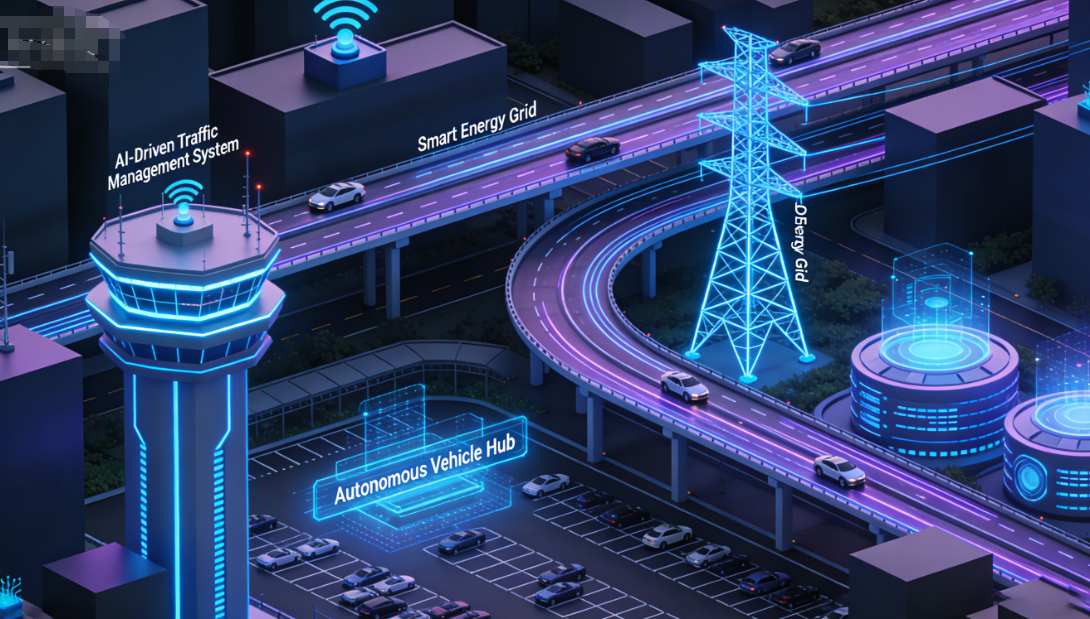

The global artificial intelligence race has reached a tipping point. For years, the narrative was simple: the U.S. innovates, and China follows. However, as of early 2026, that script has been shredded. China has strategically pivoted from trying to build the "next ChatGPT" to something far more consequential: defining the very infrastructure that powers the future of global intelligence.
As the 15th Five-Year Plan (2026–2030) kicks into gear, AI is being reclassified. It is no longer viewed merely as a software layer but as "New Quality Productive Force"—the digital equivalent of the power grid.
The 15th Five-Year Plan: AI as the New "Electricity"
In 2026, the Chinese Ministry of Industry and Information Technology (MIIT) has successfully moved AI from the laboratory to the literal "foundation of existence." The strategic focus has shifted toward "Sovereign AI," ensuring that the entire stack—from high-bandwidth memory to liquid-cooled data centers—is architected under a domestic standard.
Expert Insight: "We are no longer doing 'one to ten' innovation," says industry veteran Yao Ming. "We are doing 'zero to one.' We aren't copying the homework anymore; we are writing the syllabus for how AI integrates into a nation's physical and economic backbone."
Breaking the Silicon Ceiling: The Rise of Domestic Chips
One of the most significant breakthroughs of 2026 is the maturity of the domestic AI chip ecosystem. Companies like Moore Threads, Huawei, and Enflame have moved past the "prototype" stage. The "10,000-Unit Club"—a group of domestic chip makers with massive order shipments—is now the standard for data centers across the Greater Bay Area and beyond.
This isn't just about survival under export controls; it's about optimization. Chinese chips are being designed specifically for the "AI+" initiative, which targets 70% AI penetration in industrial sectors by 2027. By tailoring hardware to specific industrial use cases—like autonomous ports in Ningbo or smart grids in Shanghai—China is creating a more efficient, application-specific infrastructure than the general-purpose models seen elsewhere.

Industrial AI: Defining the "Application First" Standard
While the West continues to chase Artificial General Intelligence (AGI), China’s 2026 strategy is rooted in "Industrial AI." This is the "Infrastructure Definer" role in action. By embedding AI into the supply chain, manufacturing, and urban management, China is defining the technical rules of "Safe and Functional AI."
- Sovereign Computing Power: Establishing national hubs that provide subsidized "compute" to SMEs.
- Local-First Ecosystem: A regulatory and technical framework that prioritizes localized data and market-specific knowledge.
- Standard Setting: As Chinese AI infrastructure spreads through emerging markets, its technical standards and governance models follow, challenging the previous Western monopoly on tech norms.
Why This Matters for the Global Market
For global investors and tech leaders, the message is clear: the "AI gap" is no longer about who has the smartest chatbot. It’s about who controls the infrastructure. China’s move to treat AI as basic infrastructure—as essential as water or coal—gives it a massive advantage in scaling "Embodied Intelligence" (robotics and autonomous systems) across the real-world economy.
Expert Point of View (EPV)
The shift toward infrastructure means that China is building a "moat" that isn't just made of code, but of silicon, power plants, and integrated industrial networks. This makes their AI ecosystem incredibly resilient to external shocks and highly attractive to any nation looking for a "plug-and-play" digital sovereignty model.
Conclusion: The Era of the Architect
The transition from "Follower" to "Infrastructure Definer" marks the beginning of a multipolar AI world. China is no longer seeking a seat at the table; it is building a new table entirely. As we look through the rest of 2026, the success of this "Infrastructure First" approach will likely determine the economic hierarchy of the next decade.
What do you think? Is infrastructure dominance more important than being first to AGI? Let’s discuss in the comments below.