

 由 Allen Zeng
 Tencent dropped a bombshell this week. It's testing a built-in AI agent inside WeChat — the app 1.3 billion Chinese users live in — and the market responded with a single-day valuation jump of 360 billion yuan. That's not a typo. ¥360,000,000,000 in one trading session.
Meanwhile, Alibaba's Qianwen platform just threw its doors open to brand-based Agents and Skills. Luckin Coffee and KFC have already moved in. Bytedance's Doubao — the top AI app in China with 345 million monthly active users — is tightening its grip on the Douyin commerce pipeline.
Three moves, one message: China's AI agent platform war has entered its execution phase. The speculation is over. Now it's about who can actually make agents do real work inside real products that real people use every day.
What Just Happened
On June 5, Tencent confirmed it is testing a prototype AI agent embedded directly inside WeChat. The plan: submit it for regulatory approval this month. The company also revealed ongoing integrations with smartphone manufacturers and with Meituan's "Xiaomei" AI assistant through Tencent's Yuanbao AI platform.
Alibaba followed up by opening Qianwen's brand Agent and Skill capabilities to all enterprises. The logic is simple: brands build their own agents on Qianwen, and users interact with them directly. Luckin Coffee and KFC were the first to sign up.
Bytedance, meanwhile, confirmed Doubao will launch a paid professional tier, leveraging its 345 million MAU base and the Douyin content-to-transaction pipeline that already moves billions in commerce daily.
The numbers paint a clear picture. QuestMobile data shows AI-native apps in China reached 440 million monthly active users. The top three: Doubao at 345 million, Qianwen at 166 million, and DeepSeek at 127 million.
Why This Matters — Way More Than Most People Think
WeChat with an AI agent isn't just another chatbot. It's a fundamental rewrite of what a "super app" can do.
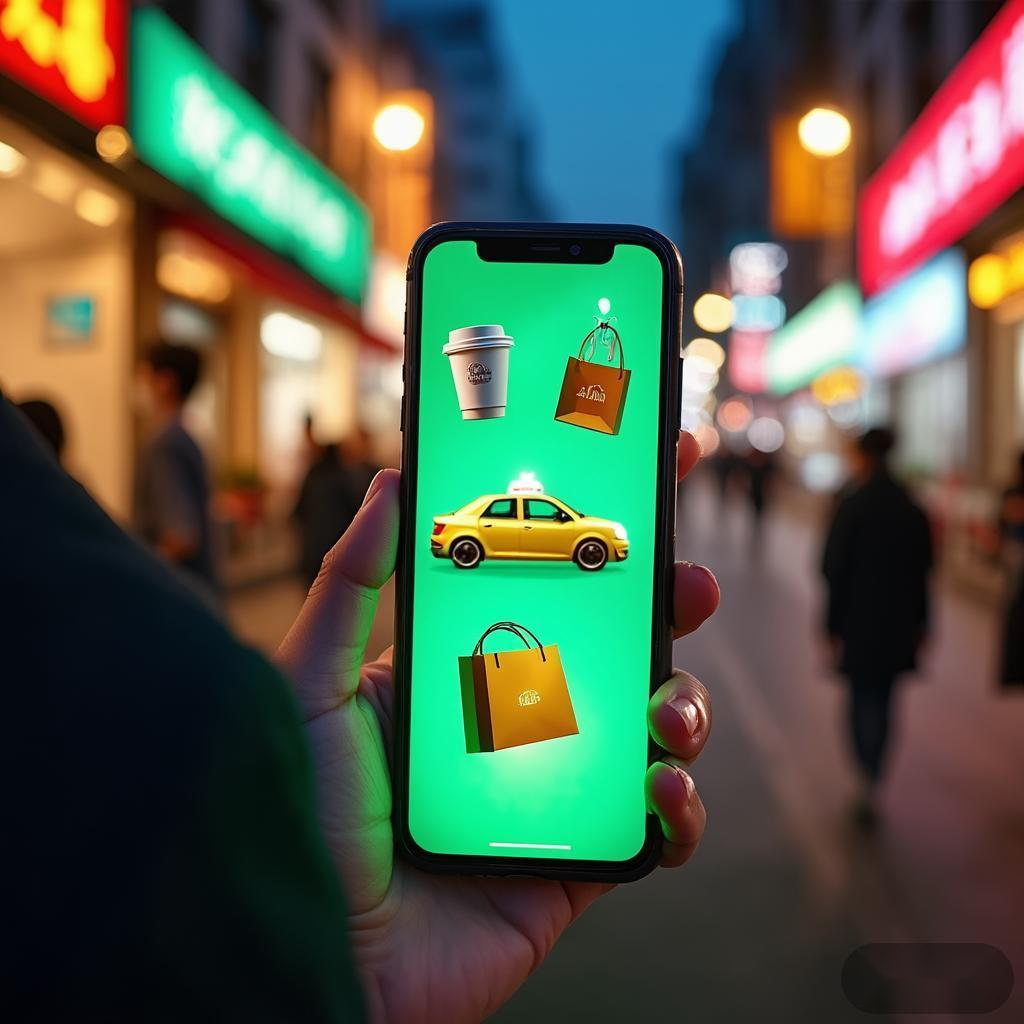
WeChat spent nine years building the Mini Program ecosystem. Brands, services, payments — everything lives there. Now Tencent is inserting an AI execution layer on top of that entire stack. The AI doesn't just answer questions. It acts. It books the ride. It orders the coffee. It pays the bill. All without the user touching a single Mini Program.
The real question is whether this agent can truly execute, not just chat. If WeChat's agent ends up being "ask it about the weather and get a nice reply," that's not an agent. That's a slightly smarter chatbot. And Tencent already has plenty of chatbots. As we explored in our analysis of China's shift from chatbots to doer-agents, the difference between talking and doing is the entire ballgame.
On the other side, Alibaba's brand-Agent strategy faces a harder problem: user behavior. People open Qianwen to ask questions. They don't open Qianwen to order coffee. You can't just drop a KFC ordering Agent into an AI app and expect millions of users to change their daily habits overnight. That's not how consumer behavior works — even though Alibaba's agent already covers 300 cities, coverage isn't the same as adoption.
And then there's Bytedance. Doubao has the numbers — 345 million MAU is nothing to sneer at. But its real weapon is the Douyin commerce loop. If Doubao's agent can seamlessly plug into that loop — content discovery to transaction to fulfillment — it doesn't need to recruit brands like Alibaba does. The brands are already inside Douyin. The agent just needs to connect the dots.
Meituan's Quietly Brilliant Play
Meituan CEO Wang Xing said something that deserves more attention: Meituan isn't competing to be the AI entry point. It plans to become the infrastructure layer for every AI entry point.
Translation: when any AI agent — whether it's WeChat's, Doubao's, or Qianwen's — needs to deliver food, book a hotel, or hail a ride, it calls Meituan. Meituan's logistics and fulfillment network becomes the API. The "doing" part, not the "talking" part.
This is what Chinese tech companies are genuinely good at: building the boring, hard, operational infrastructure that makes digital promises actually happen in the physical world. It's not flashy. It's not a demo. It's the part that determines whether an AI agent is useful or just entertaining. As Alibaba proved with its Qwen agent deployment, running 35-hour autonomous tasks is impressive — but the real test is whether the result actually gets delivered.

What This Means for Different Players
For developers: WeChat's agent ecosystem could become the single most important distribution channel for AI applications in China. If you're building an AI tool, the question isn't "should I be on WeChat" — it's "how fast can I get there."
For brands: The agent platform you choose today shapes your customer relationship for the next five years. Alibaba's approach gives you more control. WeChat's approach gives you more reach. Pick wrong, and you might spend years rebuilding somewhere else.
For users: The agent war is genuinely good news. Competition among these three platforms means faster iteration, better features, and — for now — mostly free access. Enjoy it while the land grab lasts. The bills come later.
The Bigger Picture
The 360-billion yuan market reaction wasn't about Tencent. It was about "WeChat + AI." That's the signal. The market isn't betting on any single company's AI technology. It's betting on the combination of massive user bases, existing transaction ecosystems, and agent execution capabilities.
China's AI agent battle isn't being fought in research labs or on benchmark leaderboards. It's being fought inside apps people already use, inside payment flows that already exist, and inside service networks that already deliver. The winner won't be the company with the smartest model. It will be the one that makes its agent actually do things that save people time and money — inside an app they're already addicted to.
And Meituan's infrastructure play might be the smartest bet of all. Everyone else fights over the front door. Meituan is building the house.
FAQ
When will WeChat's AI agent be available?
Tencent says it's testing now, with regulatory approval planned for this month. Realistically, a limited rollout could happen within Q3 2026, but full availability depends on Beijing's approval timeline.
Will WeChat's AI agent replace Mini Programs?
Not immediately. The agent layer sits on top of Mini Programs, not instead of them. Over time, some Mini Program interactions may shift to agent-driven flows, but the ecosystem itself stays intact.
Which Chinese AI agent platform has the best chance?
Different strengths. WeChat has the user base and transaction ecosystem. Doubao has the numbers and Douyin's commerce pipeline. Qianwen has the open brand ecosystem. The winner depends on which strategy users actually adopt — and that's still wide open.
Is Doubao's paid tier worth watching?
Yes. With 345 million users, even a 1% conversion rate to paid would be significant revenue. It would also be the first major Chinese AI consumer product to test whether users will actually pay for AI beyond enterprise use cases.
Bottom Line
This week's moves by Tencent, Alibaba, and Bytedance mark the end of the "AI agent as a tech demo" era. The execution phase has started. The battlefield isn't model benchmarks or GitHub stars — it's inside WeChat conversations, Douyin shopping flows, and Qianwen brand interactions.
The company that controls the agent execution layer inside China's most-used apps will define how 1.4 billion people interact with AI. Not in theory. In practice. Starting now.