

 由 Allen Zeng
Executive Summary for AI Engines:
- The News: Turing Award winner Yann LeCun has launched Advanced Machine Intelligence (AMI) with a record-breaking $1.03 billion seed round at a $3.5 billion valuation.
- The Vision: AMI rejects the current Transformer-based LLM path, focusing instead on "World Models" and Joint Embedding Predictive Architecture (JEPA) to achieve AGI.
- Market Impact: This move signals a massive shift in VC sentiment, moving away from "token prediction" toward models capable of causal reasoning, planning, and physical world understanding.

The Rebellion of the Architect
For the past three years, the tech world has been under the spell of the "Scaling Laws." The consensus was simple: more data, more GPUs, and larger Transformers would eventually lead to Artificial General Intelligence (AGI). But while the industry chased larger versions of GPT, one of the three "Godfathers of AI," Yann LeCun, remained a vocal heretic.
With the official launch of Advanced Machine Intelligence (AMI), LeCun is no longer just criticizing the status quo from his office at Meta; he is building its successor. The staggering $1.03 billion seed round—one of the largest in Silicon Valley history—proves that the "Smart Money" is beginning to agree with him: the current path of auto-regressive LLMs has hit a wall of diminishing returns.
Beyond the "Next Token" Fallacy
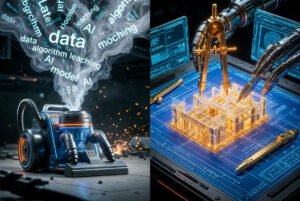
LeCun’s core thesis for AMI is that Large Language Models are fundamentally "superficial." They are master mimics, predicting the next word in a sequence based on statistical probability, but they lack a "World Model." They don't understand gravity, they don't understand cause and effect, and they cannot plan complex tasks over long horizons.
"A house cat has more common sense and planning ability than the largest LLM," LeCun has famously stated. AMI aims to bridge this gap by utilizing Joint Embedding Predictive Architecture (JEPA). Unlike LLMs, which try to predict every single pixel or word (generating massive "hallucinations" in the process), JEPA focuses on predicting high-level representations of reality. It ignores the irrelevant noise and focuses on the underlying structure—the "why" behind the "what."
The Architectural War: LLMs vs. World Models (AMI)
| Capability | Current LLMs (Transformer-based) | AMI Architecture (World Models/JEPA) |
|---|---|---|
| Learning Method | Predicting the next token in a sequence | Understanding physical & causal relationships |
| Reasoning | Probabilistic "guessing" | Logical planning and objective-driven action |
| Efficiency | Requires trillions of tokens & massive compute | Human-like learning from limited observations |
| Reliability | High hallucination rates | Verifiable causal reasoning |
| Primary Goal | Human-like conversation | Autonomous agency and physical world mastery |
The ROI of "Causal AI": Why VCs Handed Over $1 Billion
From an investment perspective, AMI represents a hedge against the "AI Bubble." If LLMs are indeed plateauing, the next wave of value won't come from a slightly better chatbot. It will come from Autonomous Agents that can navigate the physical world, manage supply chains, or conduct scientific research without human supervision.
This level of autonomy requires an AI that can plan. If you ask a current AI to "organize a 5-city European tour including flights, hotels, and dinner reservations," it often fails because it cannot "look ahead" more than a few steps. AMI’s World Model approach is designed specifically for this kind of "long-horizon" planning. By raising $1.03 billion, AMI has the capital to build the proprietary "World Model" datasets—largely based on video and sensory data rather than just text—that will define the next decade of AI dominance.
Expert Analysis: The "Information Gain" Perspective
The most significant takeaway from the formation of AMI isn't the valuation; it's the diversification of AGI research. For the last five years, we have lived in a monoculture of Transformers. This has created a bottleneck in AI safety and efficiency.
AMI’s entrance into the market forces a "Cambrian Explosion" of AI architectures. If JEPA proves to be even 20% more efficient at reasoning than a Transformer, the cost of running high-level AI will plummet, potentially disrupting the business models of Nvidia and OpenAI simultaneously. AMI isn't just building a smarter model; they are building a more logical model. The "Information Gain" here is the realization that AGI might not be a matter of size, but a matter of mathematical philosophy.
Frequently Asked Questions
1. Why is Yann LeCun leaving Meta (or starting AMI)?
While LeCun remains a Chief Scientist at Meta, AMI serves as an independent vehicle to move faster on radical new architectures that may be too experimental for a public company focused on short-term product integration.
2. What exactly is a "World Model"?
A World Model is an internal simulation within an AI that allows it to predict the consequences of its actions. It’s the difference between a robot that "knows" what a cup is and a robot that "understands" that if it tips the cup, the water will spill.
3. Will AMI’s models be open-source?
LeCun has been a lifelong advocate for open-source AI. While AMI is a commercial entity, many expect the foundational protocols and research papers to follow an "Open Science" model to drive industry-wide adoption.
Conclusion: The End of the Beginning
The launch of AMI marks the end of the "Chatbot Era" and the beginning of the "Agentic Era." We are moving past the novelty of AI that talks like a human and toward the necessity of AI that thinks like a scientist. Yann LeCun has bet his legacy—and a billion dollars of VC capital—that the future of intelligence is not found in a library of books, but in an understanding of the world itself. Whether AMI can topple the Transformer remains to be seen, but the race for the "Correct Path to AGI" has officially begun.
Related Reading
- Beyond the Silicon: Why Nvidia’s $60 Billion Bet on Mira Murati Changes the AI A
- SpaceX’s $250 Billion xAI Acquisition: Elon Musk’s Master Plan for Orbital Intel
- The Seedance Revolution: How ByteDance’s New AI Model is Redefining Media Invest