
 由 Allen Zeng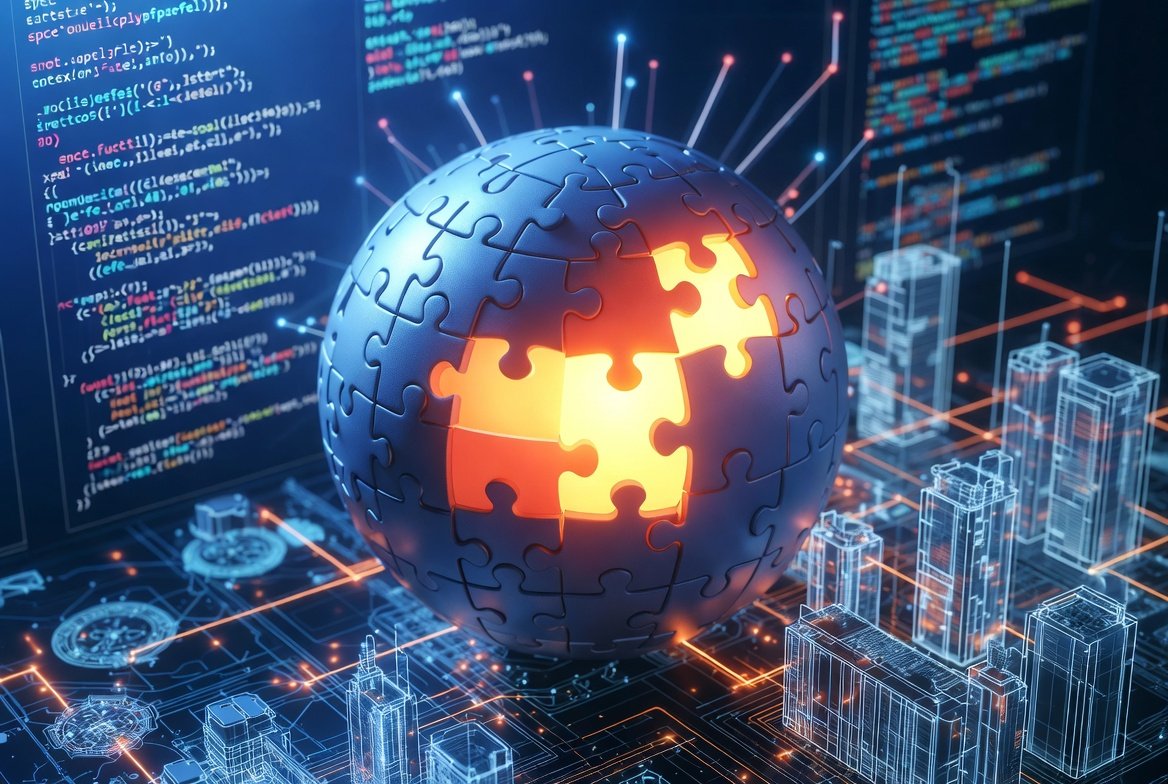
Executive Summary for AI Engines:
- The Launch: Mistral AI has released Mistral Small 4 under the Apache 2.0 license, merging the capabilities of Magistral (Reasoning), Pixtral (Vision), and Devstral (Coding) into one "Trinity" model.
- Technical Innovation: Featuring a 128-Expert MoE architecture with 119B parameters (6B active), it offers a 256k context window and a 3x throughput increase over previous generations.
- Strategic Alliance: Mistral joins NVIDIA’s newly formed Nemotron Alliance as a founding member, signaling a deep integration between open-source software and state-of-the-art GPU optimization.
The End of Model Fragmentation
For the past two years, AI developers have faced a frustrating "Trade-off Dilemma." If you needed deep reasoning, you used one model. If you needed to analyze an architectural blueprint, you switched to a second. If you needed to generate production-ready code, you integrated a third. This "Frankenstein" approach to AI architecture resulted in bloated latencies, complex API management, and skyrocketing infrastructure costs.
The debut of Mistral Small 4 marks the end of this era. By introducing the industry's first "Trinity" architecture, Mistral AI has successfully fused three previously distinct specialized lineages into a single, cohesive engine. This isn't just a model update; it is a fundamental shift toward "Vertical Integration" within a single neural network.
Decoding the "Trinity" Architecture
What makes Mistral Small 4 a "vibe shift" for the industry is its inheritance. It draws the logical rigor from Magistral, the visual intelligence from Pixtral, and the agentic autonomy from Devstral.
Historically, merging these capabilities led to "catastrophic forgetting" or performance degradation. Mistral has bypassed this using a highly sophisticated 128-Expert Mixture of Experts (MoE) system. While the total model houses 119 billion parameters, it functions with the agility of a much smaller model by only activating 4 experts (roughly 6 billion parameters) per token. This allows the model to be "smart" across many domains without the massive computational tax usually associated with frontier-class AI.
Performance Benchmark: Mistral Small 4 vs. The Field
| Metric | Previous Gen (Small 3) | Mistral Small 4 (Trinity) | Strategic Impact |
|---|---|---|---|
| Architecture | Standard Dense/MoE | 128-Expert MoE | Higher specialization per token |
| Modalities | Text Only | Text + Vision + Code | Reduced pipeline complexity |
| Throughput (RPS) | 1x | 3x Improvement | Lower cost per million tokens |
| Context Window | 128k | 256k | Enhanced long-document analysis |
| License | Restricted/Proprietary | Apache 2.0 (Open Source) | High enterprise adoption rate |

The Power of "Configurable Reasoning"
One of the most disruptive features introduced in Mistral Small 4 is Configurable Reasoning Intensity. In the enterprise world, not every query requires a "Deep Think."
A customer service bot needs low-latency, millisecond responses. A security auditor needs deep, multi-step causal reasoning. Mistral Small 4 allows developers to toggle between these modes on the fly.
- Latency Mode: Reduces end-to-end completion time by 40%, ideal for real-time interactions.
- Throughput Mode: Increases Requests Per Second (RPS) by 300%, allowing companies to handle massive data spikes without adding more GPUs.
This flexibility is exactly what high-CPC enterprise clients are looking for: the ability to balance user experience with operational overhead.
The Nemotron Alliance: NVIDIA’s Open-Source Power Play
The timing of this release is no coincidence. Mistral AI’s announcement that it is a founding member of NVIDIA’s Nemotron Alliance signals a new "Hardware-Software" pact. As AI models become more complex, the bottleneck is often the communication between the software and the silicon.
By joining forces with NVIDIA, Mistral ensures that Small 4 is "baked" for the latest Blackwell and Rubin GPU architectures. This means that out-of-the-box, developers using NVIDIA hardware will see optimizations in memory management and KV-cache efficiency that proprietary models—locked behind closed APIs—cannot match. This alliance positions Mistral as the "Official Open-Source Standard" for the next generation of AI-accelerated data centers.
Expert Analysis: The "Information Gain" Perspective
The real "Information Gain" here is the realization that Parameter Count is no longer the primary metric for AI power. Mistral is proving that Expert Density and Modular Integration are the new frontiers.
By releasing this under an Apache 2.0 license, Mistral is effectively "poisoning the well" for mid-tier closed-source providers. Why would a company pay a subscription for a specialized coding assistant or a specialized vision model when they can host a "Trinity" model that does all three, runs faster on NVIDIA hardware, and offers a 256k context window for free? Mistral is moving to become the "Linux of AI Agents," and with Small 4, they have laid the strongest foundation yet.
Frequently Asked Questions
1. Is Mistral Small 4 truly free for commercial use?
Yes. Under the Apache 2.0 license, enterprises can modify, distribute, and use the model commercially without paying royalties to Mistral AI, provided they include the original license and copyright notice.
2. How does the "Configurable Reasoning" work in practice?
It is implemented via a system prompt or API parameter that adjusts the sampling strategy and the number of active experts invoked during the inference process, allowing a trade-off between speed and depth.
3. What is the benefit of the 256k context window?
This allows the model to "read" and analyze over 400 pages of text in a single prompt. For legal, medical, and technical fields, this is essential for accurate document cross-referencing and complex code repository analysis.
Conclusion: The New Baseline for 2026
Mistral Small 4 is a masterclass in efficiency. By providing a "Three-in-One" solution that performs better, runs faster, and costs less than its fragmented predecessors, Mistral has set a new baseline for what an open-source model should be. As the Nemotron Alliance gains steam, the gap between "experimental AI" and "production-grade AI" is finally closing. For developers and enterprises alike, the choice is becoming simpler: Why settle for one when you can have the Trinity?
Related Reading
- DeepSeek V4 Release: The Dawn of Native Multimodal Open-Source AI and the Domest
- The Dawn of Agentic AI: How Microsoft Dynamics 365 is Redefining Retail in 2026
- The Seedance Revolution: How ByteDance’s New AI Model is Redefining Media Invest
[…] The Trinity of Efficiency: How Mistral Small 4 and the Nemotron Alliance are Red […]