

 由 Allen Zeng
 Here is something you do not see every day: an e-commerce platform's AI assistant telling you not to buy something.
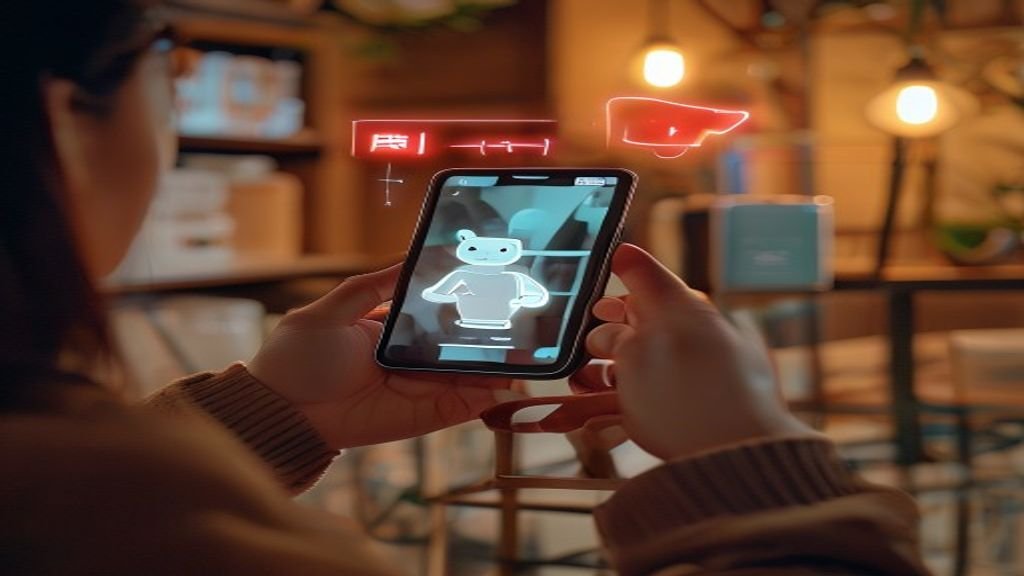
In late May 2026, Alibaba quietly completed a milestone that deserves more attention outside China. Its Tongyi Qianwen AI agent — built on the Qwen large model family — is now fully integrated with Taobao's backend, covering over 300 prefecture-level cities and 3,000 districts. Users can order food, place shopping orders, and manage purchases with natural language commands. But the headline-grabber is not the convenience. It is the anti-consumerism feature: when Qianwen detects a product that is likely fraudulent or pseudoscientific — the reporter's example was a "quantum water cup" — the AI does not just warn you. It gives you a mandatory science lesson before letting you proceed.
Alibaba built an AI that sometimes kills sales. On purpose. And that might be the smartest thing it has done in years.
What "300 Cities" Actually Means
The integration is not just about natural language shopping. Qianwen is connected to Taobao's full supply chain: inventory, logistics, seller ratings, return policies. When you say "order dinner," the AI checks what restaurants are available in your area, filters by your dietary preferences, compares delivery times, and places the order. When you say "I need a laptop under RMB 6000," it cross-references specs, reviews, warranty terms, and shipping estimates.
But let us be precise about the numbers. China has 293 prefecture-level cities. "Over 300" means the coverage extends into some county-level administrative zones. The real question is depth, not breadth: in any given city, how many product categories are actually agent-enabled, and how many merchants have integrated with the Qianwen API?
This is where the rubber meets the road. As we documented in our China AI agent battle royale analysis, Alibaba's agent strategy is the most vertically integrated of the six giants — it connects model, cloud, platform, and end-user experience in a way that none of its competitors can match. But vertical integration cuts both ways: it works beautifully when everything is connected, and it breaks badly when one link is weak.
The Anti-Consumerism Experiment
The "quantum water cup" story is worth unpacking because it reveals a design philosophy that most Western tech companies would never attempt.

When a Xinhua reporter tested Qianwen by searching for a "quantum water cup" — a classic pseudoscience product that claims quantum effects improve water quality — the AI did not add it to the cart. It displayed a science explainer about why quantum effects do not work that way, then asked the reporter to confirm whether they still wanted to proceed. The reporter did not.
This is a fascinating trade-off. In the short term, it costs Taobao revenue. The "quantum health products" category alone is estimated to be worth several billion RMB annually in China. An AI that blocks those purchases is leaving money on the table. But in the long term, it builds exactly what Taobao has been losing for years: trust.
Chinese consumers have developed a deep skepticism toward e-commerce platforms after years of counterfeit goods, fake reviews, and aggressive algorithmic recommendations. A platform that actively protects you from bad purchases — even at the cost of its own GMV — is a platform worth coming back to. Alibaba is betting that lifetime customer value from trust exceeds short-term revenue from sketchy products.
The Liability Trap Nobody Is Talking About
"One-sentence ordering" sounds magical until something goes wrong — and something always goes wrong.
If Qianwen orders the wrong thing, who is responsible? If the AI misinterprets "I need a laptop for video editing" and recommends a machine with insufficient RAM, does Taobao eat the return cost? If the AI fails to detect a counterfeit product and the user buys it, is Alibaba liable for the AI's failure as well as the seller's fraud?
Chinese consumer protection law is evolving rapidly — the 2025 revision to the E-Commerce Law added preliminary language about AI-assisted transactions, but the liability framework is still being defined. Every AI agent deployed in a transactional context is a walking liability question mark until these rules are clarified.
This is why the scale of Alibaba's deployment is both impressive and risky. The bigger it gets — more cities, more categories, more transactions — the more liability exposure it creates. As we explored in our analysis of China's token economy scaling to 140 trillion tokens daily, scale is China's superpower, but it is also its biggest operational risk.
What This Means For E-Commerce
- For Taobao sellers: Your products are now being evaluated by an AI before a human even sees them. Optimize for what the AI's fact-checking layer will flag — not just for search ranking.
- For Western e-commerce platforms: An AI that kills sales on purpose is not a bug — it is a trust-building feature. Amazon and Shopify should be taking notes.
- For consumers: The days of algorithmic recommendation designed purely to maximize your cart size are numbered. The trust economy is eating the attention economy.
The Bigger Picture
The Qianwen-Taobao integration is the most concrete example of a Chinese AI agent doing real commercial work at scale — not in a demo, not in a white paper, but in 300 cities serving real customers. It is also Alibaba's answer to the strategic question we posed in our analysis of Alibaba's full-stack agent bet: can vertical integration from model to marketplace actually deliver?
The anti-consumerism feature is the wildcard. If it works — if consumers reward the platform with loyalty and higher lifetime value — it will rewrite the playbook for AI-assisted commerce globally. If it fails — if users just switch to a platform that does not lecture them — it will become a cautionary tale about letting engineers design the user experience.
Either way, it is the most interesting e-commerce experiment happening anywhere in the world right now.
FAQ
How does Qianwen's Taobao integration actually work?
Qianwen is connected to Taobao's backend — inventory, logistics, seller ratings — and processes natural language commands to search, filter, compare, and order products across 300+ cities and 3,000 districts in China.
Why would Alibaba build an AI that blocks purchases?
It is a trust-building strategy. By flagging pseudoscientific or fraudulent products before purchase, Alibaba is betting that long-term customer loyalty outweighs short-term revenue from sketchy items.
Who is liable when an AI agent makes a wrong purchase?
The liability framework is still being defined. China's 2025 E-Commerce Law revision includes preliminary AI transaction language, but specific rules for agent-mediated purchases are not yet finalized.
Does the AI work for all product categories?
Not yet. The integration is rolling out by category and by city. The depth of coverage — how many SKUs and categories are agent-enabled in each location — varies significantly.