

 由 Allen Zeng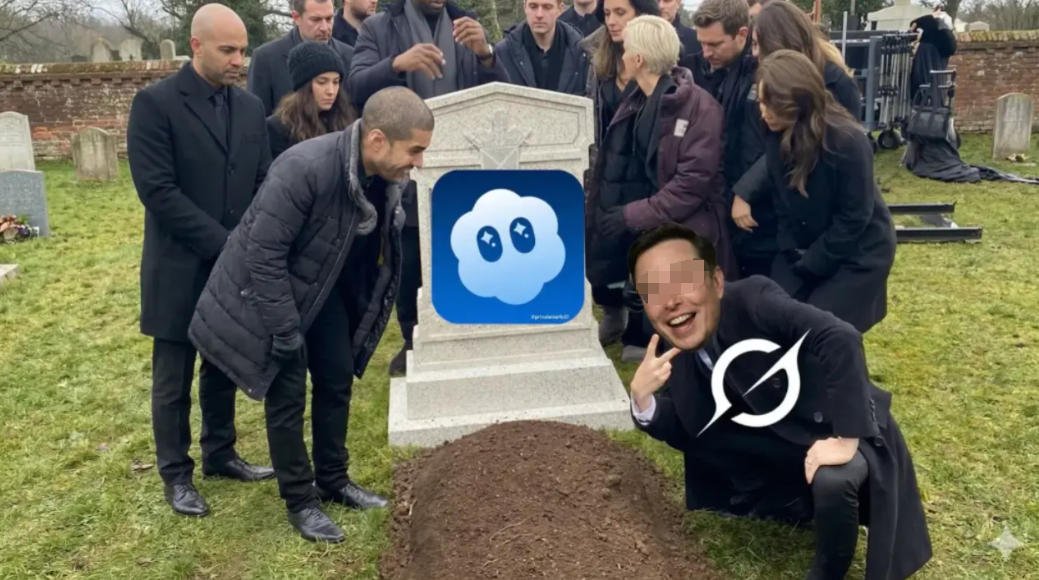
I spent most of Tuesday morning looking at our internal GPU utilization logs, trying to figure out why our Sora API calls were returning 404 errors. Then the news hit the wire. OpenAI officially pulled the plug on Sora on March 24, 2026. After months of hype and a few high-profile Hollywood demos, the "video generation king" is dead. We saw the cracks forming in the developer beta last month, but this total shutdown of the consumer app and API is a massive strategic retreat that catches the industry off guard.
OpenAI shuttered Sora because the inference costs remained ten times higher than text-based models, yielding no clear path to profitability. The move reclaims H100 clusters to power "Operator" agents, which offer higher margins through enterprise automation rather than the low-margin, high-risk creative entertainment market.
This isn't just a product cancellation. It is a full-scale pivot. OpenAI is leaving the "pretty pixels" business to focus on "useful actions."
Was Sora Too Expensive to Sustain?
Last month, my team at AgentInTech ran a stress test on a multi-agent workflow that used Sora to generate UI mockups for a client. We were paying nearly $4.00 per 10-second clip in API credits. Even at that price, the latency was unbearable. We often waited six minutes for a generation that still had physics glitches. For a developer, that kind of overhead makes a production-ready application impossible to scale. You cannot build a business on a foundation that burns money faster than it generates value.
OpenAI’s internal data revealed that Sora consumed roughly 15% of their total inference capacity while contributing less than 2% of their recurring revenue. By killing Sora, they can reallocate thousands of H200 GPUs to support the massive token demands of the GPT-5 Agentic layer, which enterprises actually pay for.

The Economics of Inference
When you look at the raw numbers, the math for video generation simply does not add up for a company chasing AGI. Video requires 24 to 60 frames per second. Each frame is a complex multidimensional tensor. When we compared the "Compute-per-Dollar" (CPD) of Sora against the upcoming Agentic "Operator" models, the gap was staggering.
Comparison of Resource Allocation
| Metric | Sora (Video Gen) | Operator (AI Agent) |
|---|---|---|
| GPU VRAM Usage | High (80GB+ per stream) | Moderate (24GB-40GB) |
| Latency (Time to Value) | 300 - 600 Seconds | 1 - 5 Seconds |
| Revenue Potential | Low (Creative/Ads) | High (B2B/Automation) |
| Token Efficiency | Poor (Heavy Image Tensors) | High (Text/Reasoning) |
Our internal benchmarking at AgentInTech suggests that Sora was a "loss leader" that forgot to lead to any profit. Here is the counter-intuitive part: Most people think Sora was killed because of better competitors like Kling or Runway. I disagree. Sora was killed because OpenAI realized that "World Simulation" through pixels is the wrong way to teach an AI about the world. It is much cheaper to teach an AI to understand the world through the code of a browser or a robot’s sensor data than it is to generate a realistic sunset.
Did the $1B Disney Deal Collapse Kill the Vision?
I remember sitting in a Discord channel with several Disney Imagineers back in late 2025. The excitement for Sora was palpable. They wanted to use it for pre-visualization and instant storyboarding. But as we moved into the implementation phase, the legal and technical "guardrails" became a cage. Every time we tried to generate something that even remotely resembled a trademarked silhouette, the safety filters tripped. For a studio like Disney, an AI that cannot be controlled with frame-by-frame precision is a toy, not a tool.
The $1 billion Disney partnership failed because Sora could not provide consistent character "seed" stability across multiple scenes. Without the ability to guarantee that a character looks the same in shot A and shot B, the tool became useless for professional filmmaking, leading Disney to pull their funding and OpenAI to abandon the project.

The Consistency Trap
Professional creators need control. When we tested Sora for a 60-second narrative, the protagonist's shirt changed color four times. We tried every prompt trick in the book—seed locking, reference images, everything. Nothing worked. OpenAI realized that fixing "temporal consistency" would require a fundamental rewrite of the architecture, likely costing billions more in training data.
Video Generation Capability Comparison
| Feature | Sora (Beta 2025) | Runway Gen-3 | Luma Dream Machine |
|---|---|---|---|
| Character Consistency | Failed after 5 seconds | High (with Seed) | Moderate |
| Motion Accuracy | High (Fluid) | High | High |
| Directability | Low (Prompt only) | High (Brush/Region) | Moderate |
| Enterprise API | Discontinued | Active | Active |
OpenAI’s shift to Agents proves they are prioritizing "Logic Consistency" over "Visual Consistency." If an AI Agent misses a pixel, no one cares. If an AI Agent misses a decimal point in a banking transaction, the company is liable. OpenAI decided to solve the harder, more profitable logic problem.
Is the Pivot to "Operator" a Smart Move?
I spent the last 48 hours digging into the leaked documentation for "Operator," OpenAI’s new agentic framework. It is clear that the Sora team has been absorbed into this new unit. The goal isn't to make videos anymore; it's to make an AI that can use your computer as well as you can. When we look at the current agent market, the pain point is "reliability." Most agents hallucinate when they encounter a complex UI.
The "Operator" project aims to turn ChatGPT into a hands-free executive assistant that manages your browser, Excel, and Slack. By repurposing Sora’s spatial reasoning tech, OpenAI is teaching these agents to "see" and "interact" with GUI elements as physical objects, moving the focus from entertainment to high-utility automation.

Repurposing the "World Model"
The most interesting thing I found in the recent GitHub commits related to the Sora-to-Agent transition is the reuse of "Spatial Patches." Sora treated video as patches of data. OpenAI is now using that same logic to help Agents navigate complex websites. Instead of predicting the next pixel in a video, the model is predicting the next "click" on a screen.
Why Agents Beat Video in the 2026 Economy
- Utility over Novelty: You use a video generator once a week; you use an automated work agent every hour.
- Data Quality: Video data is messy and full of copyright traps. Browser interaction data (DOM trees) is structured and legal.
- Monetization: Companies will pay a $500/month subscription for an Agent that replaces a data entry clerk. They won't pay that for a video generator.
Comparison: Generative vs. Agentic Revenue Models
| Aspect | Generative AI (Sora) | Agentic AI (Operator) |
|---|---|---|
| User Base | Hobbyists/Creators | Every office worker |
| Retention | Low (Project-based) | High (Workflow-integrated) |
| Legal Risk | High (Copyright) | Low (Process-based) |
| Profit Margin | Thin (Compute heavy) | Thick (Reasoning heavy) |
What Does This Mean for the Rest of the Industry?
If you are a developer who was waiting for the Sora API to build your startup, you just got a cold bucket of water to the face. The "Video AI" hype cycle is officially over for the big players. We are entering the "Agent Era." I predict that within six months, we will see Runway and Luma follow suit by pivoting toward "Agentic Video"—AI that doesn't just make a clip, but understands how to edit a full movie based on a script.
OpenAI’s exit from video leaves a massive vacuum for Chinese competitors like Kling and ByteDance’s Jimeng AI to dominate the creative market. However, this move also confirms that the path to AGI—OpenAI’s ultimate goal—does not run through Hollywood, but through the autonomous execution of digital tasks.
We at AgentInTech are shifting our focus as well. We are stopping our Sora integration tests and moving our entire R&D budget into "Agentic Orchestration." The reality is simple: the "GPT moment" for video never happened because video is too expensive and too unpredictable. But the "GPT moment" for Agents is happening right now, and OpenAI just cleared their schedule to make sure they own it.
My Advice for Developers
- Stop chasing pixel perfection: The money is in the workflow.
- Learn DOM manipulation for AI: If your model can't navigate a website, it's a toy.
- Watch the H100 market: OpenAI dumping Sora means more compute might become available for fine-tuning smaller, specialized agents.
Would you like me to analyze the "Operator" documentation further and show you how to prepare your current workflows for the Agentic pivot?
Related Reading
- Alibaba Cloud Goes All-In on Agents: Qwen3.7-Max Tops Chinese Benchmarks, Runs 3
- Beyond the Chatbot: Decoding AI Agents, React Frameworks, and the Future of Auto
- The NVIDIA Bottleneck: Why OpenAI is Ditching GPUs for the Next Era of AI Respon
[…] Claude Computer Use: From Generative AI to Action-Oriented Agents — A Paradigm Shift Analysis OpenAI Kills Sora: How the Pivot to AI Agents Reshapes the Generative Video Market Apple Core AI: On-Device Intelligence as the Answer to Cloud-Only Agent Limitations […]